Turning 400 pages of sustainability strategy into shared intelligence.

Case summary
Bochum put together a detailed plan to develop into a renewable sponge city and become climate neutral by 2035.
To achieve these goals, the city needed to digitize its comprehensive sustainability strategy document into an instrument that could be easily monitored and shared with the community.
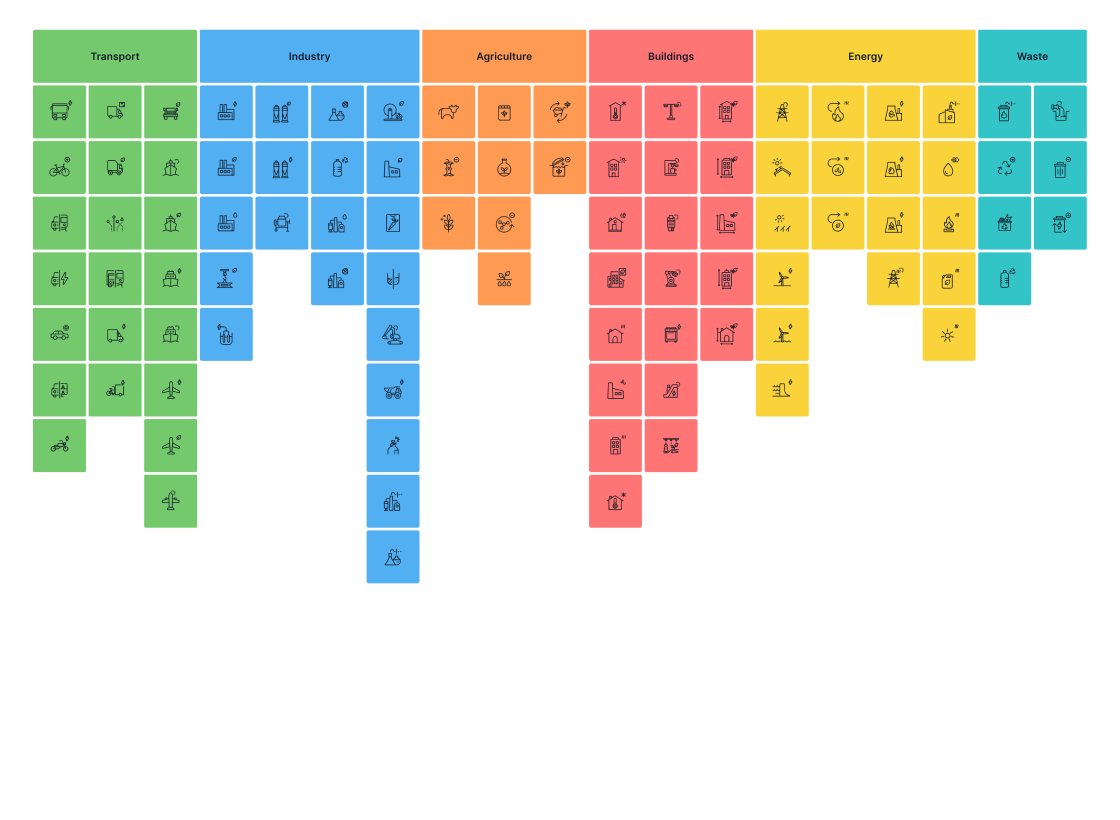
The ClimateView platform placed the city on the right track and provided a framework for collecting the right data and defining actionable interventions to reduce CO₂ emissions.
"A very text-heavy, complex concept became a dynamic system that makes connections visible, showing how valuable digitalization can be for strategic management, because it not only documents, but creates new insights."
Vanessa Russo
Climate Protection Manager,
Climate & Sustainability Unit,
City of Bochum
A data-driven and digital approach
The Ruhr region in Germany has strived to be a sustainability role model with dedicated efforts aimed at transitioning the country’s largest urban area into the greenest industrial region in the world. Bochum is the second of 53 Ruhr cities to structure its transition project in partnership with ClimateView and consultancy firm Energielenker.
Bochum’s sustainability strategy was first adopted in December 2023. The goal is not only to become climate neutral by 2035 but to develop into a sponge city, the term used to define urban areas intended to absorb rain and prevent flooding thanks to abundant natural areas such as trees, lakes and parks.
Taking the lead in climate ambition comes with its challenges. First, the city needed to figure out how to translate 400 pages of a detailed sustainability strategy document into action.
The project to digitize Bochum’s sustainability strategy had the support of consultancy firm Energielenker, which provided the expertise Russo’s team needed to convert the document into the ClimateView platform.
Daniela Windsheimer, project manager at Energielenker, knows well the challenges cities face when implementing transition plans. "I have been doing this job for 10 years with a lot of experience writing climate action plans. What always bothered me was the static concept. Now, you have a flexible instrument that you can adapt to new circumstances," she says — something echoed by Bochum’s experience.
Only when the team started to systematically transfer interventions from the sustainability strategy into the platform did it become clear how many measures overlap and where they are interdependent. "That was a real change of perspective," says Vanessa Russo.

"We missed the fact that the sustainability strategy we had was simply on paper; it was not a dynamic instrument, and a strategy should be a dynamic instrument. Sustainability needs space and further development – that's why we should regularly check whether we are on the right track and how we can react flexibly to new challenges."
-> Vanessa Russo
Climate Protection Manager, Climate &
Sustainability Unit, City of Bochum
Transparency and monitoring in one accessible platform
Working with the Transition Elements Framework means having structured data, actionable measures and a defined taxonomy based on the IPCC’s emissions guidelines. It also provided Bochum with valuable learnings, like the importance of having access to high-quality data.
"We are still lacking data, which I think is the case for every municipality. Our data collection is decentralized, which doesn't make it any easier. But we are now getting it right," explains Vanessa Russo. One key learning, she points out, is to not be afraid of the incomplete data: "It's important that we deal with it openly and take concrete steps from it."
With ClimateView, Bochum was able to turn its comprehensive and complex sustainability strategy into a data-driven and science-based instrument that will be available publicly in a dashboard planned to be released later this year, so citizens, politicians and other stakeholders can keep track of progress.
While concrete figures still aren’t available, Vanessa Russo shares initial findings, like the continuously increasing use of heat pumps and the expansion of charging infrastructure to accommodate the growing number of electric vehicles.

The project in numbers
2023
Since 2023 Bochum is already implementing 15 to 30 new interventions every year to reach its climate goal by 2035
332%
The number of electric cars increased by 6.093 units resp. 332% from 2021 to 2025
400
400 pages of sustainability strategy will become a publicly available dashboard
"Transparency is important. We have to be able to say that we have saved this and that much CO₂, and which interventions were aimed at it. Now, we can manage in a more targeted way; we can set priorities and communicate more transparently."
Vanessa Russo
Climate Protection Manager, Climate &
Sustainability Unit, City of Bochum
Transition technology for areas worldwide
The partnership with Bochum is part of a larger project signed with ClimateView to provide one climate transition platform to the entire Ruhr region, a key element in accelerating its climate ambition and green infrastructure goals.
Every city and region can drive its sustainability transition with ClimateView’s technology and training, with structured transition plans, refined targets, and developed strategies that achieve sustainable progress and improve residents’ quality of life.