

NEWS
March 25, 2026
ClimateView co-deliver city workshop in Kaohsiung
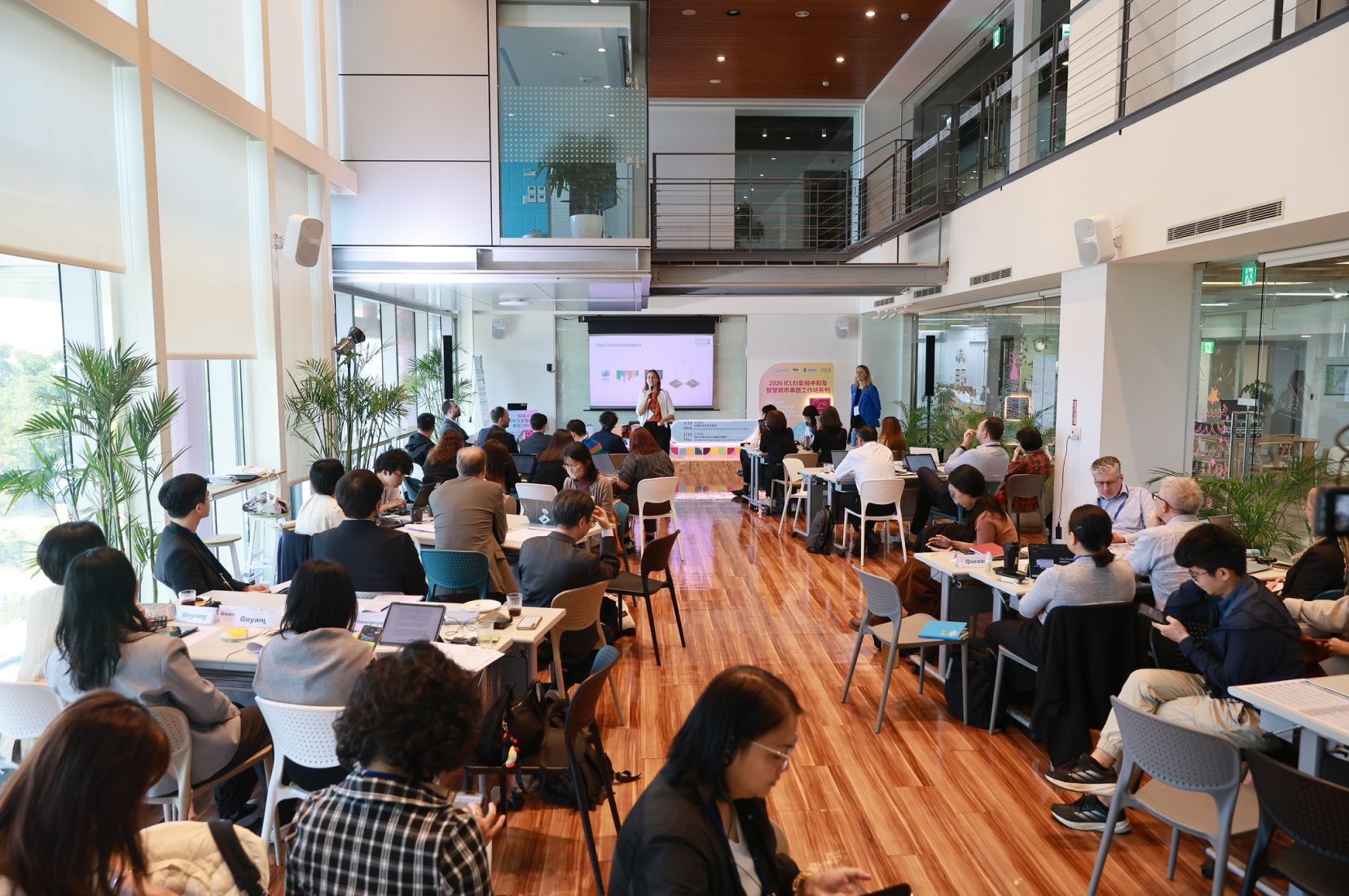
What happens when you print a climate platform and hand it to a room full of cities?
Kaohsiung — On 18 March 2026, ClimateView joined forces with ICLEI and the United Nations University to deliver a workshop for Kaohsiung-ICLEI Community of Practice cities in Kaohsiung. Ten cities from three continents sat down together, picked up markers, and did something that rarely happens at international climate gatherings: real analytical work, done collectively and in real time.
With Kaohsiung as the host city, joined by Newcastle, Adelaide, Penang Island, Pasig, Quezon, Oakland, Kyoto, Goyang, and Gwangmyeong, the participating cities represent a true cross-section of urban climate challenges. Shared Transition Intelligence, where each city helps make the next one smarter, is most helpful when it crosses different contexts. When a city in South Korea sees something useful in how a city in Australia has addressed a problem it also faces, or when a mid-sized Philippine city suggests an approach that a Japanese city hasn't considered, this exchange is only possible with a shared framework that makes very different cities' experiences understandable and comparable to one another.
This wasn’t a conference to sit around and talk about climate action. It was a real work session for the people doing it.
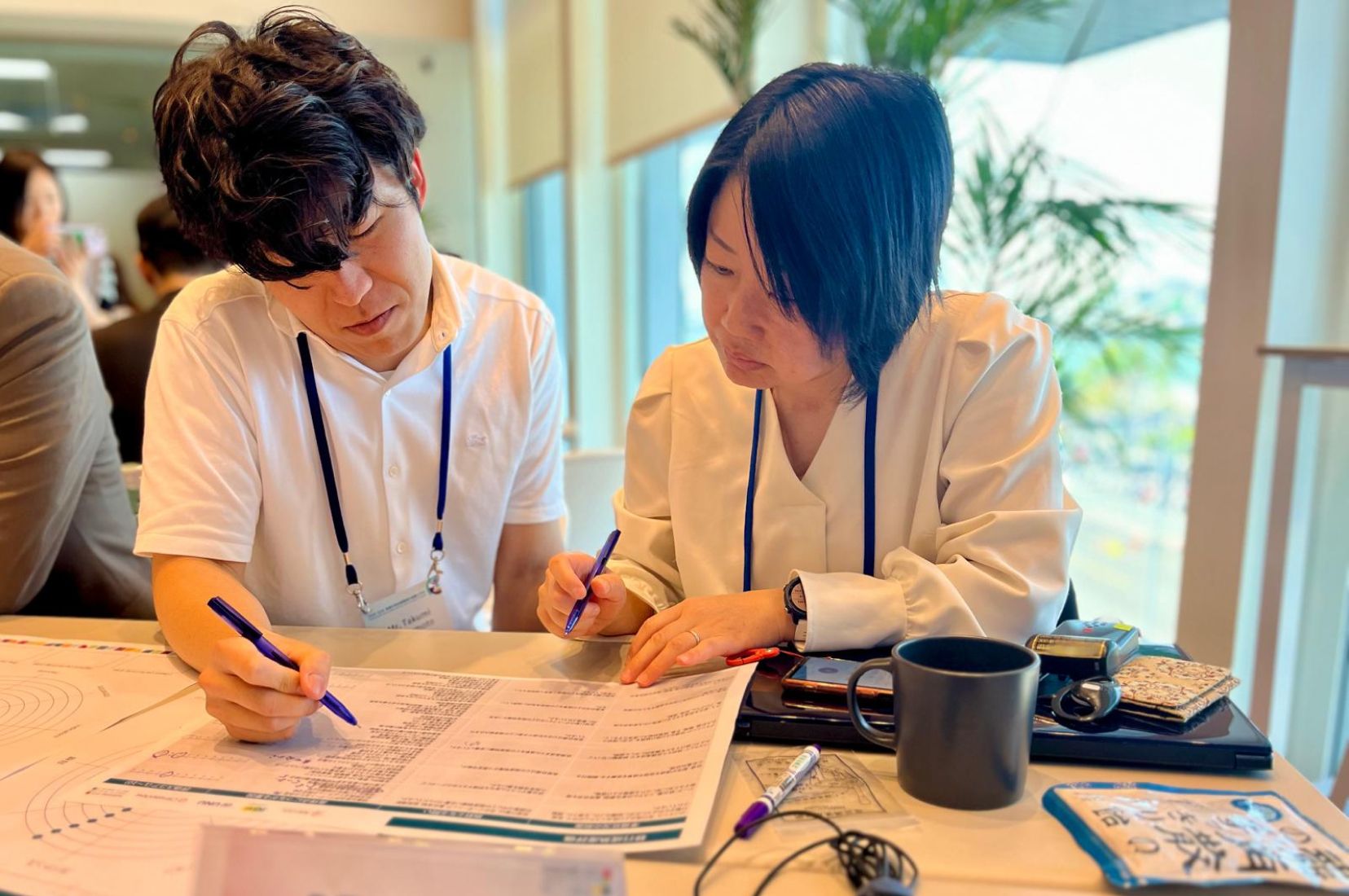
ClimateView is widely recognized as a digital workspace for climate action. For this workshop, we adapted its structured approach to understanding how cities navigate complex transitions into an analog format in four languages. The result was a step-by-step process that helped participating cities evaluate their current position in the transition, using the Transition Element Framework to identify their priority sector and shifts, assess whether their current interventions address the necessary enabling conditions, and determine the key leverage point for a new intervention.
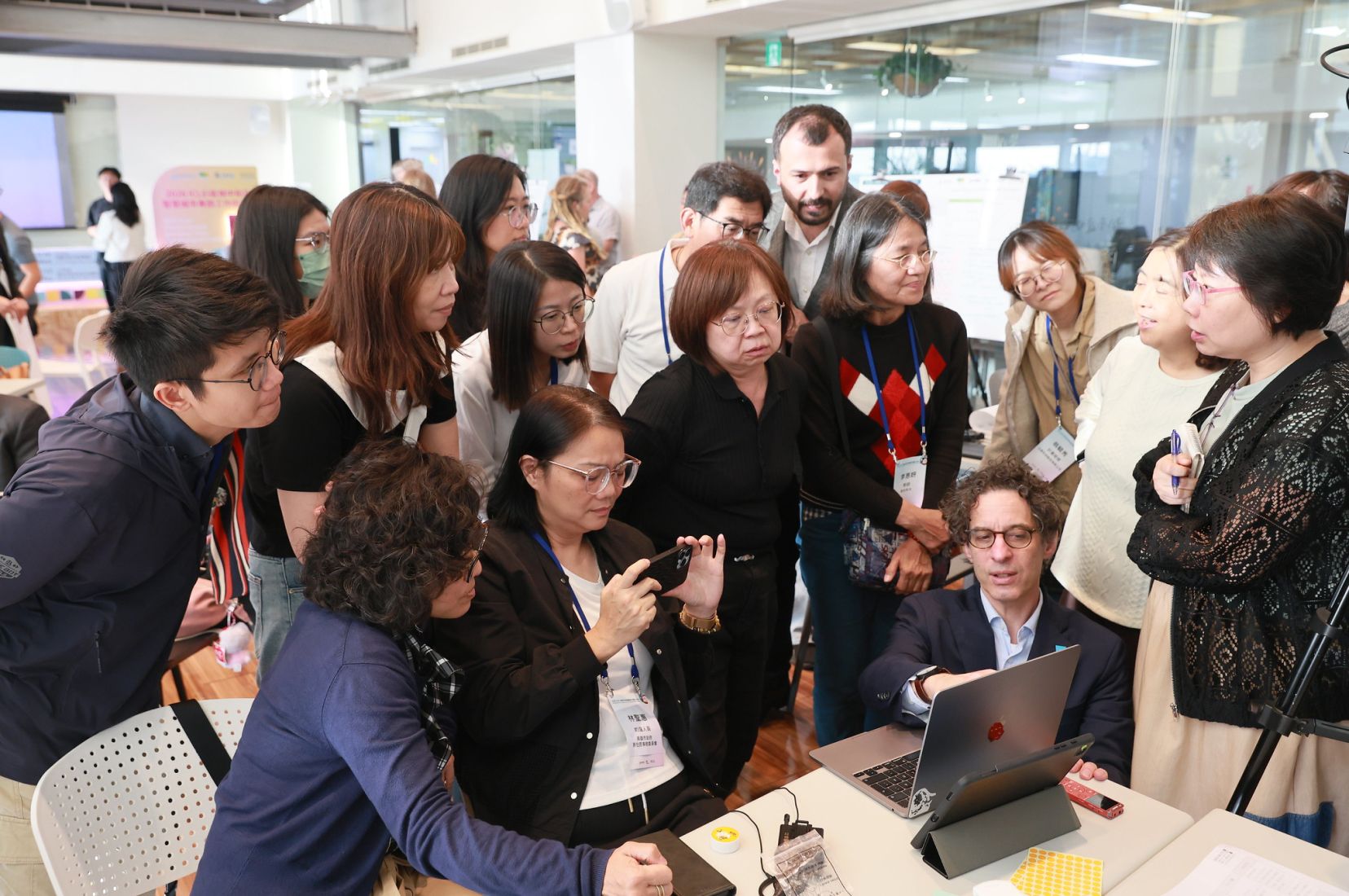
From the first interactive exercise onward, the noise level rose to a productive buzz. People leaned across tables, formed groups, and shared insights from each other's posters. When it was time to use the AI Intervention Library prototype (more on this further down) to develop a new intervention for an identified gap, we had to change the format entirely, inviting all city practitioners to come to the front and engage with the tool together. In doing so, they became active co-creators of its next version, helping to define features that will make it truly useful: inspiring new interventions, putting them in context, and helping cities build the case for action.
Below are three things that stayed with us.
1. A shared framework is the best translator
Most international sustainability events share the same core idea: that cities can learn from each other. That's true. However, exchanging knowledge without a common structure leads to stories, not insight. The Transition Element Framework and Outcome Logic used in Kaohsiung enabled another city to understand its experience directly. When each city maps its transition using the same 96 shifts and the same enabling conditions logic, a breakthrough in one city becomes something others can immediately evaluate, adapt, and implement. The workshop was conducted in four languages, and the ideas spread quickly.
2. Cities must co-create the tools they use
When we demonstrated the AI Intervention Library prototype as a tool for highlighting relevant AI-generated interventions to fill identified gaps, we did not expect how much energy it would generate. The session, in the best way, became somewhat unruly. City practitioners left their tables, gathered around, and pressed hard on what the tool could and couldn't do yet: what makes an intervention feel transferable versus inapplicable, what context is missing, and what they actually need to act on it. Practitioners understand their own needs better than anyone from outside can predict. The insights from Kaohsiung are directly shaping the next version of the AI Intervention Library: the cities that will use the tool need to be involved in building it.
3. Where you are <> where you want to go
The Transition Maturity Assessment gave each city a clear view of its current status across eight key areas: governance, data, targets, pathways, planning, interventions, indicators, and communication. For many, visualizing their profile alongside those of their peers provided instant clarity about where gaps exist. However, one of the most meaningful moments happened when a city asked a question that went beyond the assessment itself: this snapshot is useful, but we also need foresight to understand where we are headed and what it will take to get there. This comment highlights an important aspect of how transition planning really works. A maturity assessment without a forward-looking pathway risks becoming just a report card instead of a navigation tool. Combining current-state clarity with structured transition pathways and scenarios to identify necessary changes, conditions, and interventions that will drive progress is exactly the extra capability needed.
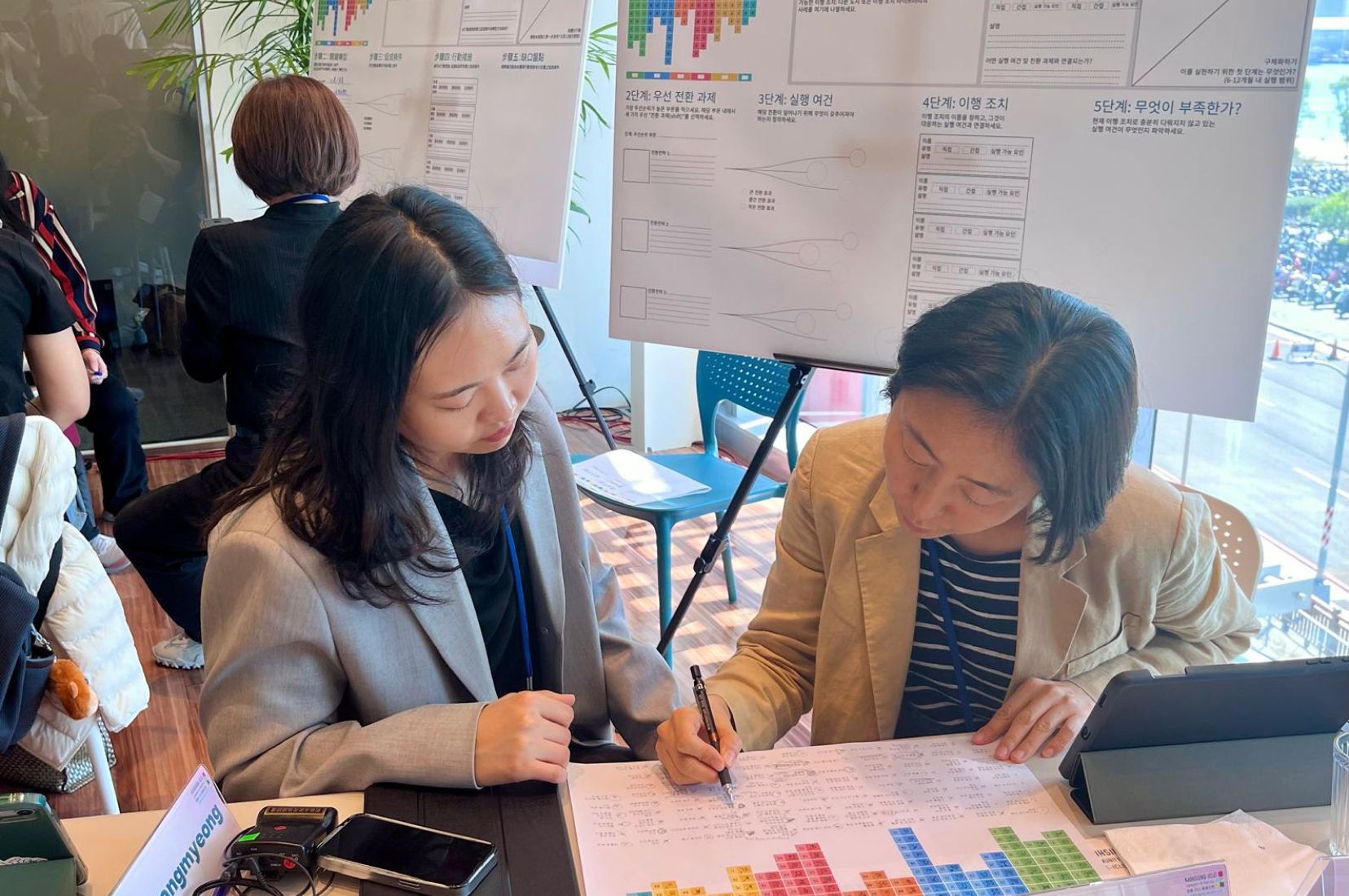
This workshop showcased the core idea behind ClimateView's work: Shared Transition Intelligence. The collective knowledge of how cities manage their climate transitions—what's working, what's missing, and which conditions enable certain interventions to succeed or fail—is far more valuable when it circulates than when it remains siloed within individual municipalities.
The workshop in Kaohsiung demonstrated that many cities already have substantial knowledge about their own climate transitions. They possess plans, programs, and hard-earned lessons about what drives change and what hinders it. What they often lack is a structure that makes that knowledge clear to themselves, colleagues across departments, and peers in other cities. When you give cities a common framework and bring them together, the existing intelligence begins to flow.
The future of technology is about empowering intelligence, not replacing it. And we're excited to continue building it.
WEBINAR
Exploring the next era of climate communication
February 6, 2026

NEWS
ClimateView supports testbed for Austrian pioneer cities
November 27, 2025
WEBINAR
ClimateView launches insights series for city practitioners
October 14, 2025
More
CASE STUDY
|September 23, 2025
DIN SPEC 91637
|August 20, 2025
WHITE PAPER
|July 1, 2025
PRESS RELEASE
|May 13, 2025
PLATFORM
|May 2, 2025
WEBINAR
|February 3, 2025
PRESS RELEASE
|January 9, 2025
PARTNERSHIP
|November 14, 2024
PRESS RELEASE
|November 13, 2024
EVENT
|November 4, 2024
PRESS RELEASE
|September 24, 2024
PARTNERSHIP
|June 13, 2024